January 28th, 2026 | 5 min read
By
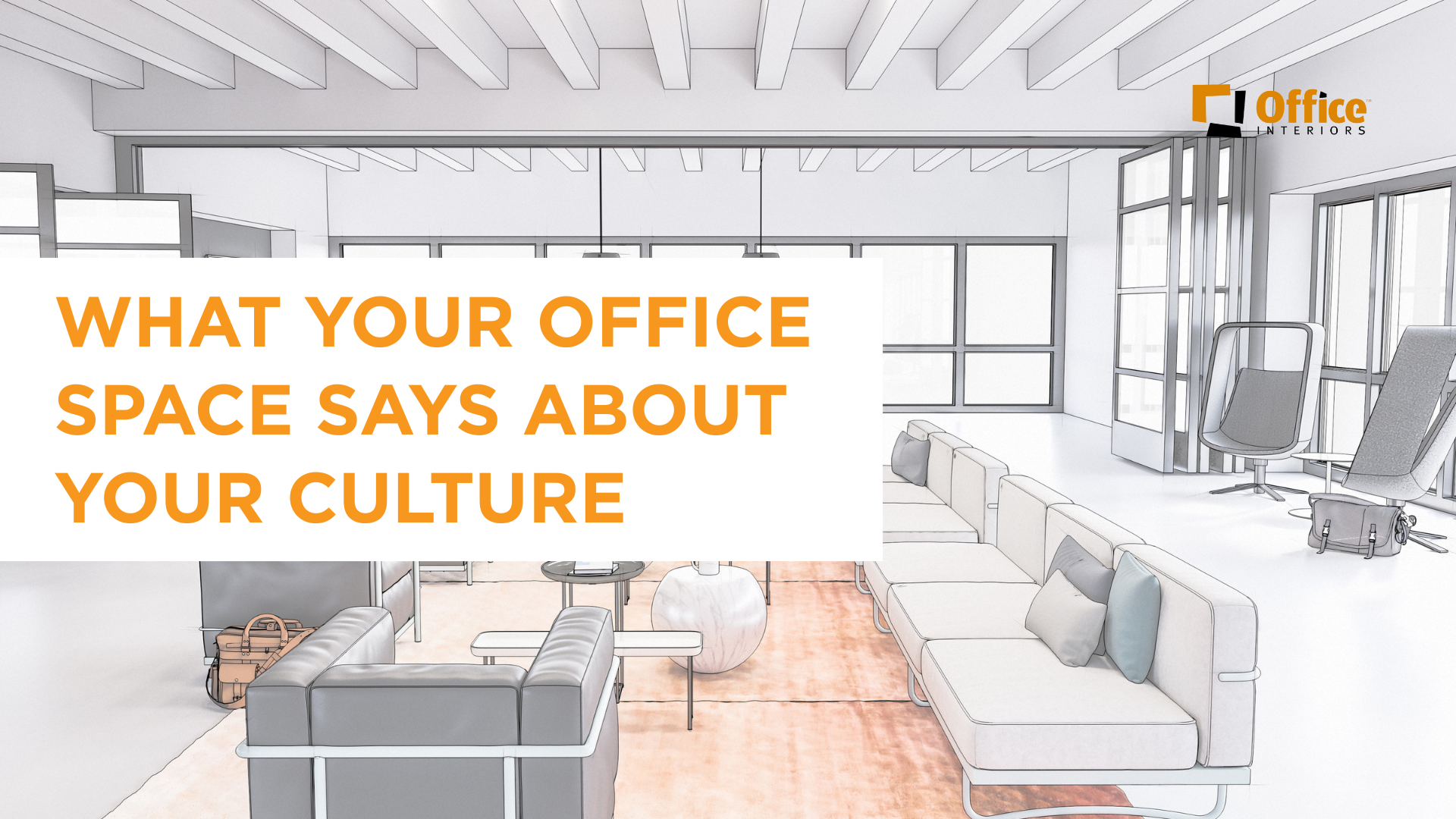
When someone walks into your office for the first time, whether it’s a new hire, a client, or a partner, they immediately get a feel for how your team operates. They may not realize it consciously, but your layout, furniture, and space design are already telling a story.
The question is: Is it the story you want to tell?
Your office layout reflects your company’s priorities and how people are expected to work. The physical environment often speaks louder than mission statements or onboarding handbooks.
TL;DR (Summary)
-
Office layout is a direct reflection of company culture and work expectations.
-
Different layouts support different behaviours, from collaboration to focused work.
-
Open offices prioritize visibility and speed but require acoustic solutions.
-
Cubicles support concentration and structured workflows.
-
Hybrid layouts accommodate diverse work styles and flexible schedules.
-
When office design aligns with culture, productivity and employee experience improve.
This article breaks down five common workspace setups and what they reveal about your team culture. Then we’ll look at how to translate that culture into thoughtful, functional design.
Open Office: Collaboration with a Potential Side of Noise
The open office is designed for accessibility. Workstations are visible, movement is easy, and there’s minimal physical separation between team members.
This setup often reflects a culture that values interaction, speed, and transparency. It’s built for teams that benefit from quick exchanges, spontaneous problem-solving, and less hierarchy.
However, openness has its trade-offs. Without boundaries, it becomes harder to concentrate because sound travels easily. Conversations, keyboard noise, video calls and background activity overlap, making sustained focus more difficult. Employees end up taking calls in stairwells or wearing headphones all day, which defeats the purpose of easy communication.
If your team works in an open layout, it likely values responsiveness but may also struggle to protect time for focus. Acoustic treatments such as wall panels and sound-masking systems can help absorb, mask and diffuse noise throughout the space, reducing everyday distractions. Additionally, quiet zones and designated call areas offer an extra layer of support, providing employees with places to concentrate or have private conversations without leaving the office floor.
 Cubicle Layout: Quiet, Focused and Deliberate
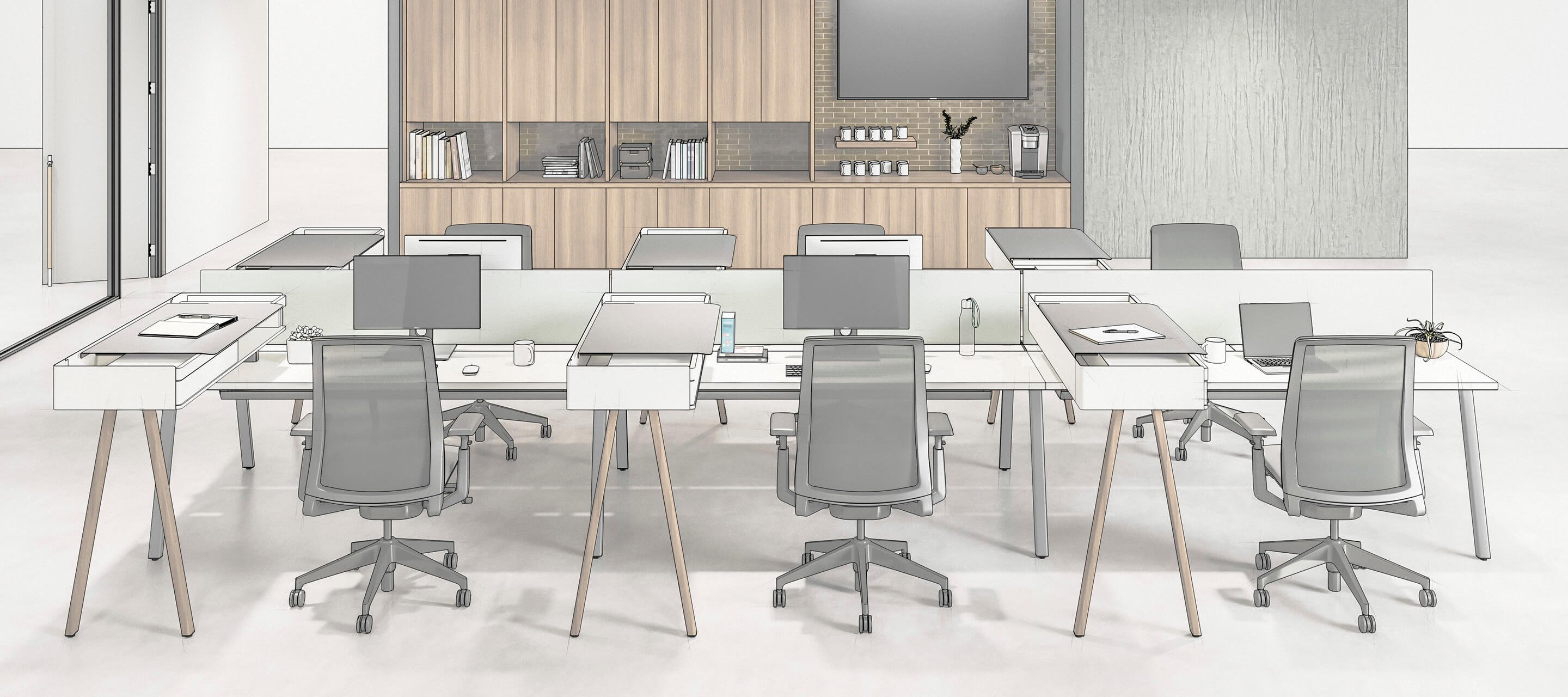
Cubicle setups create personal work zones that minimize distraction and provide structure. Each person has a defined area, some visual privacy, and a sense of ownership over their space.
This layout typically reflects a process-oriented culture. These teams often work in finance, compliance, administration, or operations. Roles that require detail, consistency, and concentration.
There’s a clear respect for boundaries. Teams like this often prefer scheduled collaboration over spontaneous meetings, and communication tends to be thoughtful and intentional.
That said, cubicle layouts can unintentionally limit teamwork and encourage isolation. If collaboration is still an important part of the job, the environment may need to include shared spaces that are just as intentional as the individual ones.
Hybrid Layout: Flexibility First
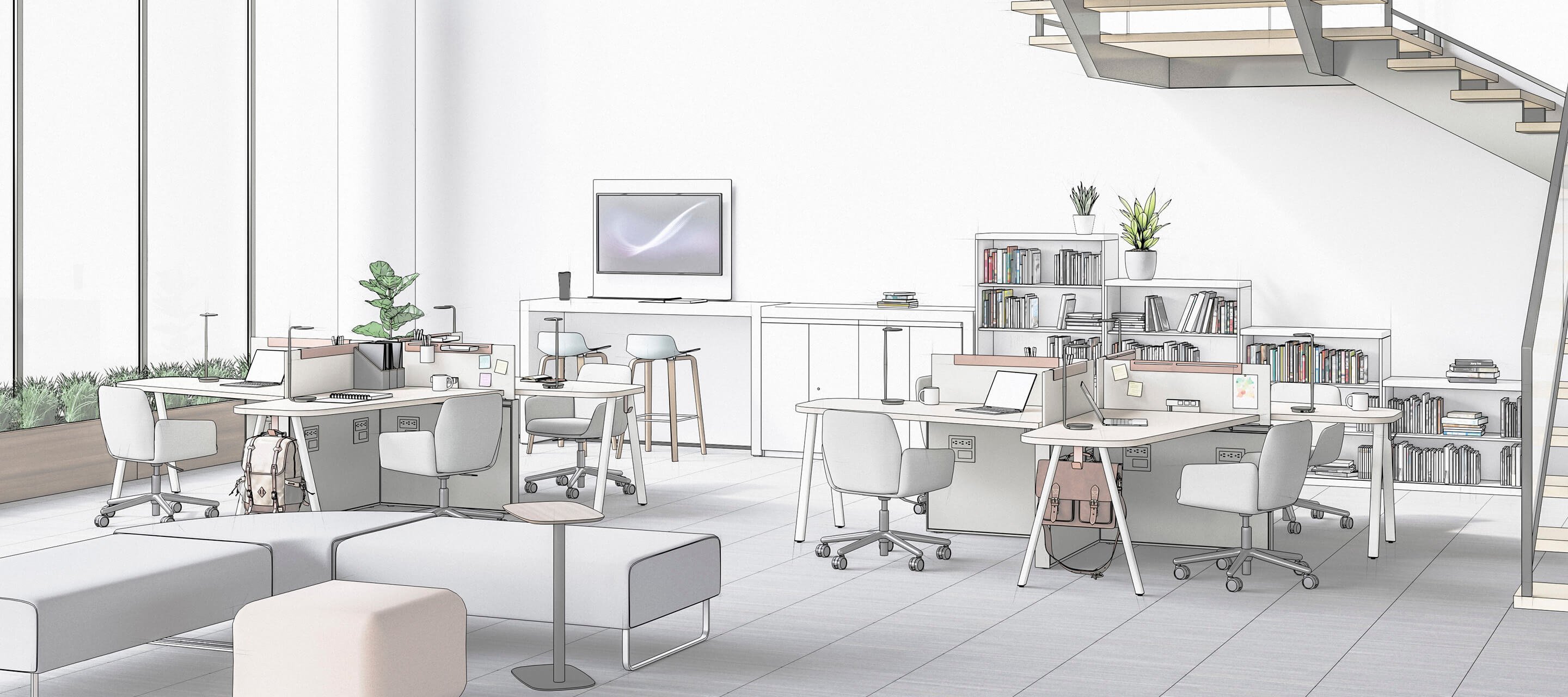
A hybrid layout is designed to support multiple working styles in one space. It includes a mix of open desks, quiet rooms, shared tables, lounge seating, and individual booths.
This approach reflects a culture that values autonomy. These teams acknowledge that different tasks require different settings and that not everyone works the same way.
You’ll often find this setup in companies with hybrid schedules or a mix of in-office and remote employees. It supports both in-person collaboration and heads-down work, often within a single day.
This flexibility works best when it’s paired with structure. Hybrid layouts can become ineffective when expectations are unclear. Clear policies around space usage, availability, and etiquette help teams make the most of the variety.
Lounge Oriented Spaces: Casual, Comfortable and Creative
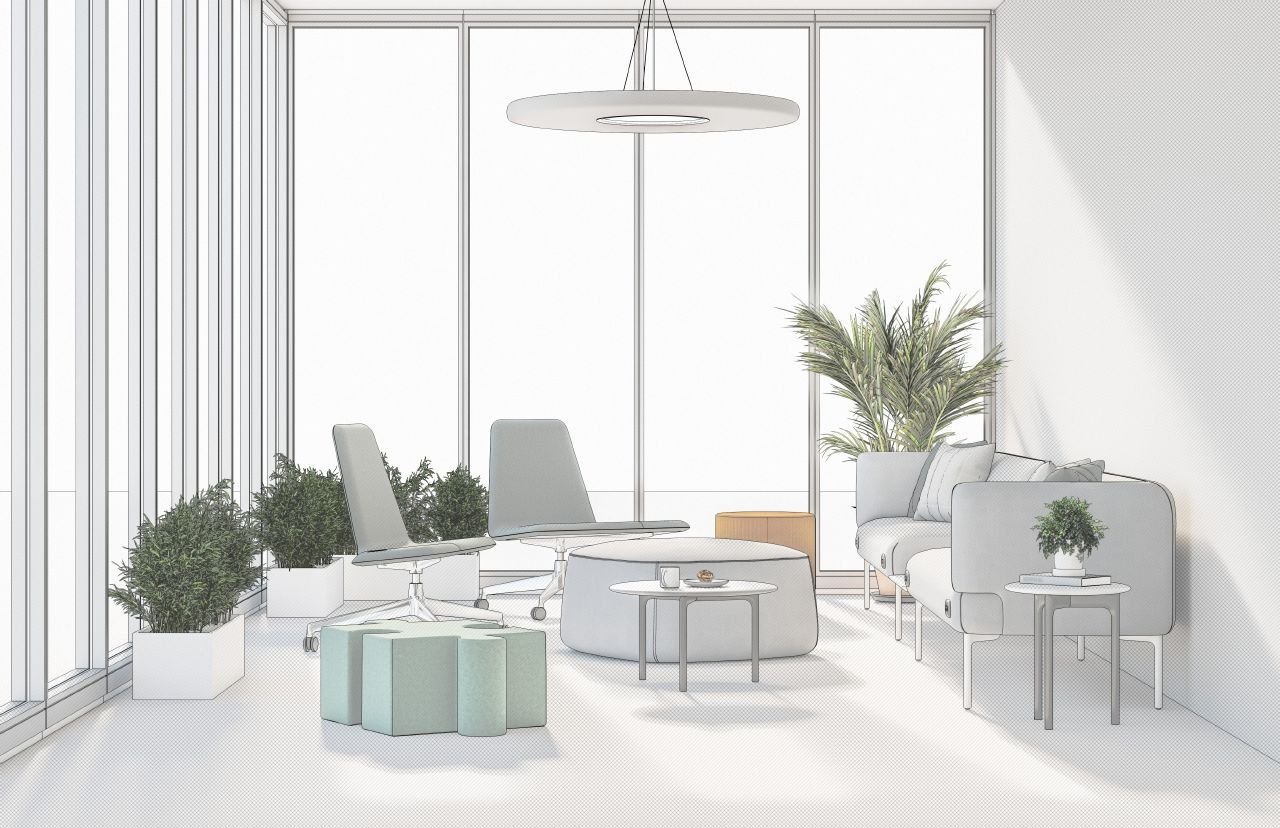
Some offices prioritize informal areas—think sofas, high-top counters, café-style seating, and unassigned zones. These environments emphasize comfort and hospitality over formality.
A lounge-heavy layout often points to a creative, people-focused culture. It’s common in industries where relationship-building, innovation, or storytelling are key. These spaces encourage unstructured conversation and reduce barriers between teams.
The tone is often relaxed, with a strong emphasis on employee experience and well-being. It may also signal a less traditional approach to hierarchy or workflow.
However, informality shouldn’t replace structure. Without dedicated focus areas or ergonomic considerations, performance can drop over time. A well-designed lounge space offers comfort while also supporting posture, acoustics, and practical needs.
 Undefined Layout: A Space that’s Outgrown its Intentions
Every office that has existed for more than a few years has likely gone through a phase of spatial improvisation. Furniture gets moved to make room for new hires. Storage rooms become meeting spaces. Desks from three product lines sit in one room.
This is what happens when growth, remote transitions, or temporary fixes become long-term solutions.
It doesn’t necessarily mean a company is disorganized. In many cases, it simply reflects a business that’s been focused on getting work done rather than perfecting the environment. But over time, that imbalance can create inefficiencies, frustration, and missed opportunities for better collaboration or focus.
A disjointed workspace sends mixed signals. It may be time for a reset, even if it’s just a reorganization of what already exists.
From Culture to Design: What Message is Your Space Sending?
Identifying your team's culture is one step. Designing a space that supports that culture is another.
Too often, companies treat culture and design as separate conversations. One lives in HR and leadership meetings; the other happens when it’s time to order furniture or renovate. But the most successful workspaces start with the recognition that culture should shape design from the start.
An office layout is never neutral. Furniture, layouts, and zoning choices reflect what a company values and how people are expected to work. A lounge chair in a central spot invites people to slow down and talk. A benching system communicates openness and speed. High-backed booths provide visual cues for privacy and focus. Even small choices, like where power outlets are located or whether chairs are fixed or movable, communicate how much freedom, control, or structure is built into the environment.
Think about your company values. Do you emphasize innovation, reliability, agility, or trust? Do your teams work best through quick problem-solving in groups or long periods of focused solo work? Do people need predictable routines or flexible schedules?
Each of these answers points toward a different layout, zoning strategy, or furniture system.
- A culture that values innovation may benefit from mobile furniture, writable surfaces, and cross-functional shared zones.
- A culture of accountability may benefit from well-defined spaces, individual ownership of work areas, and clear acoustic boundaries.
- A culture centred on service or hospitality might focus on the comfort and flow of visitor-facing areas as much as workstations.
When culture and design are aligned, the space reinforces the behaviours you want to encourage. When they are not, people adapt in small ways. Calls move to stairwells. Meetings happen in hallways. Desks become cluttered because storage was never considered.
Over time, those workarounds become normal. Productivity suffers. Frustration builds, and the space stops supporting the work.
If your team is constantly working around the office instead of with it, there is likely a misalignment between culture and design.
Rethink Your Setup!
If you’re not sure what your office says about your team culture, or if you’ve outgrown a space that once served you well, we can help.
We work with teams to assess how they use space today, what their culture calls for, and how to design around both. Reach out to learn more about our workspace planning and design services.
Topics:
